How to get rid of ingrown hair
How to prevent getting ingrown hairs during hair removal

Anyone who removes their hair will vouch for how much of a pain ingrown hairs can be - literally.
Some would even go as far as to say that they loathe ingrown hairs, and with good reason. Ingrown hairs can look a little unsightly, and they’ll take you from feeling like a shiny dolphin the day of your hair removal only to crush your dreams the next with raised red, sore spots.
If you find yourself in the unfortunate situation of having an ingrown hair - or two - our expert team at SmoothSkin has pulled together all the information you’ll need on how to treat ingrown hairs and prevent them from coming back in the future.
What causes ingrown hairs?
What causes ingrown hairs varies from person to person but the most common cause for ingrown hairs is usually traditional hair removal methods like shaving, tweezing, or waxing.
When we remove our hair using these methods, the growth of the hair isn’t stopped, which means it’ll only be so long before the hair follicle produces another hair.
When an ingrown hair occurs, it’s because the new strand of hair curves and grows back into your skin instead of ‘up and out’ because, for some reason, it's been trapped.
You’re most likely to find ingrown hairs in the areas you frequently remove hair from, making the most common areas places like:
- Face
- Armpits
- Pubic area
- Legs
What does an ingrown hair look like?
Ingrown hairs are sometimes referred to as ‘razor bumps’ or ‘shaving bumps’. In most cases, ingrown hairs simply look like red spots. They tend to cause some discomfort and can also be quite itchy.
If you have a more severe ingrown hair, you may actually be able to see the hair growing under the skin that’s causing you the problem.
How to get rid of ingrown hair?
Ingrown hair treatment will vary depending on the severity of just how ingrown your hair is. For most people, ingrown hairs will go away on their own after a few days, without having to seek professional treatment, although for some this can take a couple of weeks.
It’s important to ensure you keep the ingrown hair clean and sanitized to lessen your risk of infection. Exfoliation will also help release ingrown hairs. To do this, use warm water and exfoliate the affected area with small, gentle circular motions.
If your ingrown hair still feels swollen and inflamed, try a 1% hydrocortisone cream. Hydrocortisone cream is a topical steroid that helps to reduce inflammation, and you can usually get this over-the-counter from your pharmacist.
And as influential and satisfying as ‘Dr Pimple Popper’ videos or ingrown hair extraction videos on TikTok may be, do not attempt to do this on your own.
Extracting ingrown hairs is something that only a medical professional should do.
However, if - and only if - you have an ingrown hair where the hair is visible ‘looped’ outside of your skin, you can gently pull it out with sterilized tweezers. You’ll need to sterilize the affected area, and the tool you’re using, with rubbing alcohol and then gently lift through the hair ‘loop’ to release it from your skin.
If you think you have an infected ingrown hair, and the area is extremely painful, hot, or swollen, or if you think your ingrown hair is causing you to feel unwell, then it’s best to contact your doctor.
How to prevent ingrown hairs in 5 steps
If you consistently suffer from ingrown hairs, it’s easy to throw in the towel and assume they’ll just always be a by-product of hair removal for you. But we have some good news - ingrown hairs are preventable!
While some natural factors put people more at risk of ingrown hairs - such as having curly or coarse hair - there are some key steps to take to help you prevent getting them during the hair removal process:
1. Exfoliate, exfoliate, exfoliate!

Exfoliation is a savior - and perhaps the key ingredient - when it comes to preventing ingrown hairs. Before removing your hair, you should prep your skin by using a chemical or physical exfoliator.
Chemical exfoliators are particularly good for people who already have dry or sensitive skin as they don’t cause as much physical disruption to the skin as a mechanical exfoliant would. Common types of chemical exfoliants include lactic, salicylic, and glycolic acid.
Exfoliation helps to remove dead skin cells from the skin’s surface, which helps to prevent ingrown hairs. This is because ingrown hairs often result from a new hair growing up beneath a build-up of dead skin cells, leaving them ‘trapped’.
2. Moisturize after exfoliation

We know dehydrated skin is more susceptible to getting ingrown hairs than moisturized skin, so it’s important to keep your skin moisturized before and after hair removal.
Not only will this help to reduce irritation, but it’ll also help to reinforce your skin’s protective barrier.
Restoring and reinforcing your skin’s protective barrier is particularly important after exfoliation, as skipping moisturizing after an exfoliating treatment will only dry it out more.
3. Avoid wearing skin-tight clothes after hair removal

Tight clothing, such as thermals, sportswear, or skinny jeans, can trap your hair against the skin, which can force it to grow back into the skin.
While it’s easier said than done, especially during the colder months, you should avoid wearing skin-tight clothing after hair removal.
Similarly, if you remove hair from your pubic area or bikini line, opting for cotton underwear will help mitigate your risk of developing ingrown pubic hairs.
Cotton underwear is much more breathable and won’t irritate the skin and follicles in the same way lace or embellished undies will.
To read more about how IPL is beneficial for bikini line hair, check out our other blog.
4. If you are going to shave, do it the right way

While we’re naturally big fans of using alternative hair removal technology, such as our IPL hair removal devices, we know that not everyone is suitable for this sort of treatment.
So, if you are going to shave, you must practice proper razor hygiene to help prevent ingrown hairs.
Ideally, you want to be swapping out your razors every two to three weeks to prevent the blades from becoming dull.
Your blade should never pull at your hair or feel rough on your skin. If it does, it is dull and should be replaced immediately.
It’s also important to soak the area you’re going to shave in warm water for at least a couple of minutes before you shave.
Similarly, you should always shave with a shaving gel or cream. We all know how tempting it can be to quickly run the razor over your armpits or lower legs when you’re in a rush, but dry shaving can cause ingrown hairs.
If you don’t have shaving gel to hand, a regular hair conditioner is a good alternative as it softens the hair, making it easier for your razor to cut through.
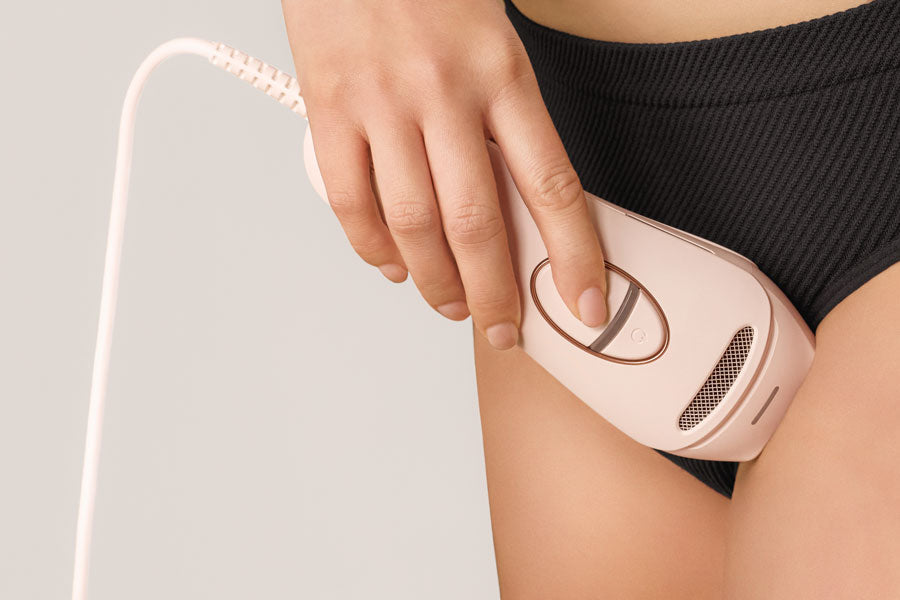
5. Try IPL

We couldn’t offer ingrown hair tips without telling you about how IPL works to prevent ingrown hairs!
IPL technology works to gradually stop hair growth over time, which will eventually result in a permanent significant reduction in hair growth.
Because IPL is a longer-term hair removal solution, it can be particularly helpful for people who suffer from ingrown hairs.
With regular IPL hair removal, you can expect to see as much as a 99% reduction* in hair after just 12 weeks. After the initial 12-week regimen, maintenance treatments are only needed every 4-8 weeks.
The results? Fewer ingrown hairs and happier skin!
*based on a SmoothSkin clinical study performed on two body areas (lower leg and underarm) - individual results may vary.
Best IPL Hair Removal and Red Light Therapy As Seen on The Lifestyle List
Why winter is the best time for IPL hair removal
Related Posts

Thinking About IPL Hair Removal? 5 Common Concerns - Answered by the Experts

How to Get Rid of Dark Shadows Caused by Hair Beneath the Skin

How to Get Rid of Bikini Line Bumps (Ingrown Hairs, Razor Bumps & Irritation)

Strawberry Skin: Causes, Treatment & How IPL Hair Removal Can Help

How to Care for Your Skin Before and After IPL Hair Removal

IPL Hair Removal Guide: What to Expect from Your First Treatments

Why IPL is the smart choice